Signs Your Website Needs a Redesign Right Now
Your website is either bringing in leads or driving them away. If you’ve noticed slowing enquiries, fewer phone calls, or dropping search rankings, your site is likely the cause for both.
When a site has problems, the impact shows up quickly. And the source is usually slow-loading pages that make visitors leave, mobile layouts that break and lose a large share of your traffic, or an outdated design that makes your business look inactive.
Fortunately, these warning signs are easy to spot once you know what to look for. This guide walks you through the most common issues that signal your website needs attention, starting with mobile problems that affect more than half of your visitors.
Your Mobile Users Are Struggling to Navigate
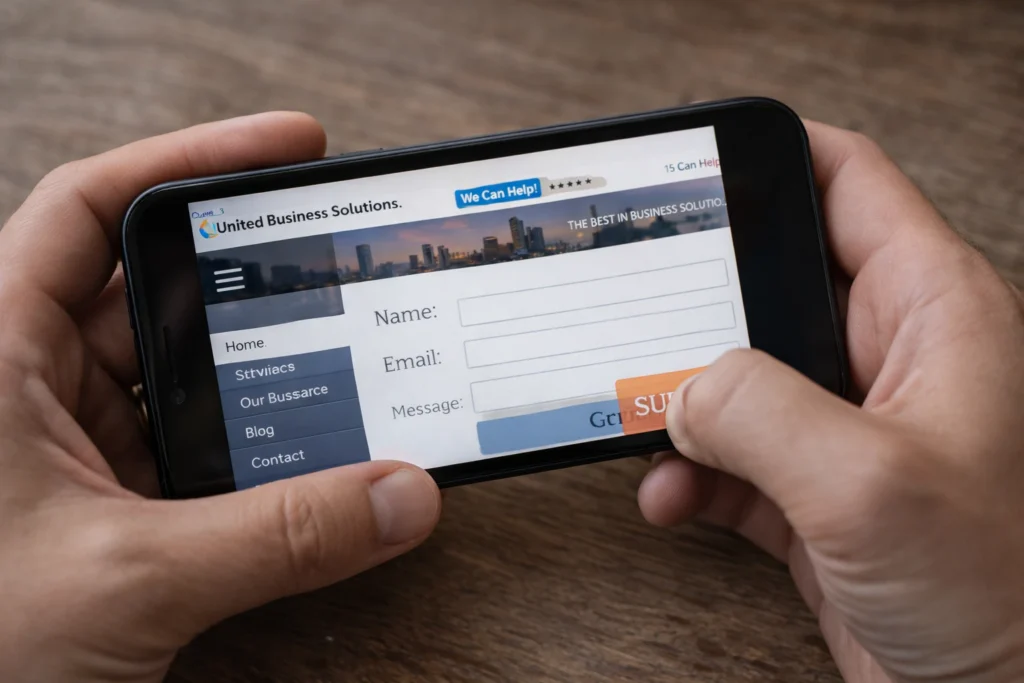
Your mobile site has a problem if users need to pinch, zoom, or scroll sideways just to read your content. Mobile traffic now accounts for 66% of all web browsing, which means most visitors experience this issue firsthand.
Here’s what typically causes it:
- Tiny Buttons That Don’t Work on Touchscreens: Buttons designed for mouse clicks don’t translate to mobile devices, making basic actions difficult. As a result, users give up before completing a form or finding your contact details.
- Content Squashed Into Unreadable Layouts: Horizontal scrolling shouldn’t be necessary just to read a sentence. But too often, text overlaps images, menus hide off-screen, or paragraphs run wider than the device allows.
- Mobile Responsiveness Affects Your Rankings: Google uses mobile-first indexing, which checks your mobile site first when deciding where to rank you. If mobile users struggle, your search engine rankings drop across all devices, not just mobile.
These mobile issues compound since poor mobile experiences hurt your rankings, while visitors leave for competitors who got it right.
Visual Design Looks Stuck in 2015
First impressions form within 50 milliseconds, according to a Behaviour & Information Technology study. That gives you only a split second to grab the attention of your users.
So if your site looks outdated, visitors may start to question whether your business is keeping up. And in most cases, this comes down to a few specific design choices:
- Colour Schemes from the Early 2010s: Heavy gradients, excessive drop shadows, and old colour palettes that were trendy a decade ago now look amateurish. Modern sites use clean, flat designs with intentional contrast that makes content easier to scan.
- Clunky Typography: Arial and Times New Roman were fine in 2010, but today they make your site look dated. These default system fonts tell visitors you haven’t updated the design, regardless of how good your services actually are.
- Outdated Layout Patterns: Centred text blocks, Flash-era animations, and carousel sliders that auto-rotate all scream “built in 2015.” Current designs prioritise clean layouts, static hero sections with clear calls-to-action, and content that doesn’t move unless users interact with it.
Updating these three elements brings your site closer to current standards without requiring a full rebuild.
Slow Performance Drives Visitors Away
The slower your site, the faster visitors leave. In fact, Google research shows 53% of visits are abandoned when pages take longer than three seconds to load. That’s more than half your traffic gone before they see what you offer. The visitors who do wait often remember the delay, making them less likely to return next time.
Slow load times also hurt your conversion rates directly. Potential customers who stick around still leave before completing a form or finding your contact details. The longer your site takes to respond, the fewer people convert into actual leads or sales.
We’ve seen Brisbane retailers drop their load time from 8 seconds to 2 and see their enquiry rate double. The speed improvement alone made more of a difference than months of other marketing efforts because visitors could use the site without waiting.
You Can’t Add the Features Your Business Needs
You want to add online booking, but your web developer says it’ll take three weeks and cost $4,000 to make it work with your current setup. That’s because your template worked fine when you started, but your business has grown beyond what it can handle.
Fortunately, adding booking systems, customer portals, or modern chat features now hits technical walls that weren’t there before.
The problem isn’t just missing functionality. Your old CMS and plugins weren’t built to scale with business growth, so every new feature requires custom workarounds. Even simple updates that should take minutes now need expensive developer hours and create bottlenecks that slow down your marketing efforts.
A website redesign built on a modern CMS fixes this. WordPress, for example, supports thousands of plugins that add booking, chat, and payment features without custom coding. You add what you need when you need it, instead of waiting weeks and paying thousands every time your business requirements change.
Search Engine Rankings Keep Dropping
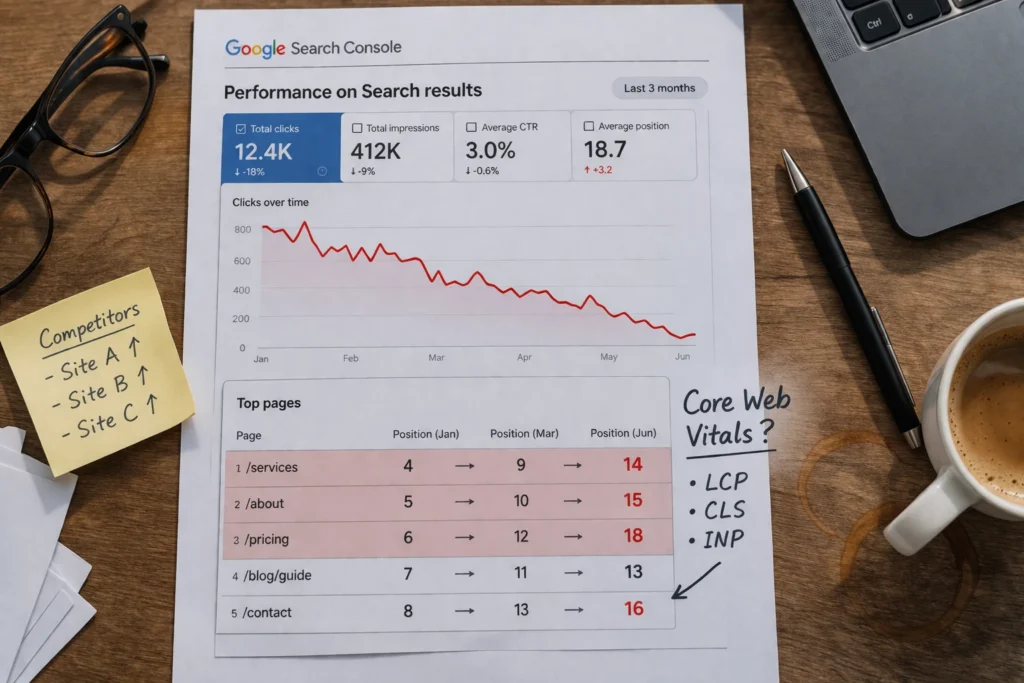
Your website’s technical foundation determines whether Google shows you on page one or page five. Over time, small neglected issues pile up: broken links, unoptimised images, and outdated code that slows everything down.
Google measures these problems through Core Web Vitals, which track your page loading speed, responsiveness, and visual stability.
When these scores drop, your search engine rankings will follow. The decline happens gradually as search engines push sites with performance issues further down the results. And competitors who fix their technical problems will climb past you, claiming the top positions while your organic traffic shrinks.
Running an SEO audit is the fastest way to spot what’s dragging you down. It shows you which fixes will have the biggest impact on your online presence, so you’re not guessing or rebuilding everything from scratch.
Ready to Fix Your Online Presence?
These website redesign signs aren’t random. They show up across underperforming sites: broken mobile layouts, outdated design, slow performance, limited functionality, and declining rankings. If you’re seeing even one of them, your site is already costing you leads.
Start with the issues affecting the most traffic:
- Mobile responsiveness (impacts 66% of your traffic)
- Page speed improvements
- Visual design updates
- Search ranking recovery
Not sure which fixes to prioritise? Get in touch to pinpoint the technical issues costing you the most leads.